
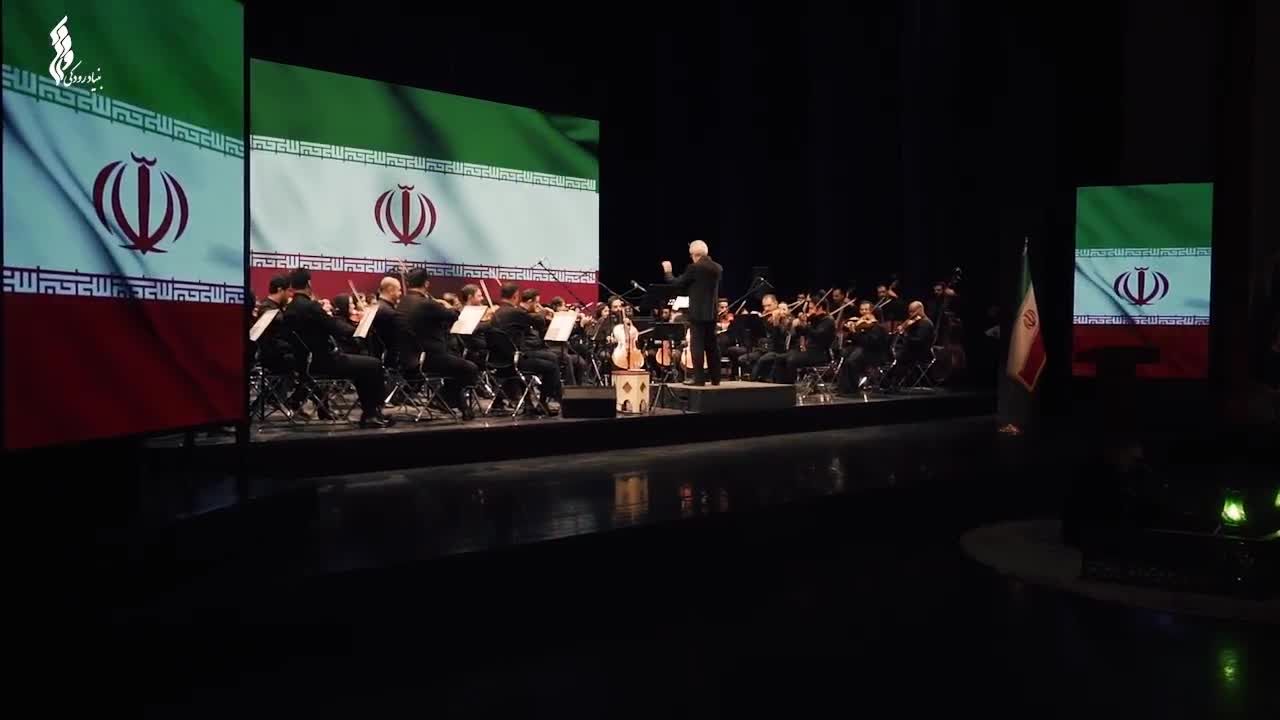
A significant cultural and artistic ceremony was held in Tehran under the title "Ceremony Commemorating the 40th Anniversary of the Martyred Leader of the Revolution – Iran's Custodian." The event took place at the "Vahdat" Hall in the capital and featured a notable attendance of senior officials, alongside prominent cultural, artistic, and media figures. The gathering was presented as a reflection of national solidarity and Iran's civilizational stature.
Organized to mark the fortieth anniversary of the Islamic Revolution leader's martyrdom, the hall served as a unifying platform to express fidelity and to recall his leadership and intellectual legacy. The solemn atmosphere blended culture, art, and national spirit.
The ceremony witnessed broad official and cultural participation. Attendees included Minister of Culture and Islamic Guidance Seyed Abbas Salehi, Minister of Science, Research and Technology Hossein Salar Amoli, Government Spokeswoman Fatemeh Mohajerani, Head of the Government Media Council Elias Hazrati, and cultural-political figure Ahmad Masjed Jamei.
Numerous leading artistic and cultural figures were also present, such as directors Mohammad Mehdi Asgarpour and Reza Mirkarimi, artist Mohammad Hossein Farahbakhsh, theatrical performer Davoud Fathali Beigi, artist Kourosh Zarei, and artist Houshang Towkli. The event also featured notable participation from religious scholars and thinkers, including Hojjatoleslam Khosrowpanah, showcasing a diversity of attendees and the unity of Iran's cultural and religious fabric.
The proceedings commenced with a recitation from the Holy Quran, followed by musical performances by the Iranian National Orchestra under the direction of Maestro Homayoun Rahimian. The orchestra performed the Iranian national anthem alongside patriotic works such as "Ey Iran," creating poignant moments embodying national pride.
The program included video presentations highlighting stages from the late leader's life, as well as speeches and testimonies from cultural and artistic personalities recalling his humanitarian stances and his role in supporting culture and the arts.
Several intellectuals delivered addresses during the ceremony. Poet Afshin Ala spoke of personal experiences with the late leader, praising his humility and attention to cultural details. Director Mohammad Mehdi Asgarpour emphasized that understanding the leader's cultural legacy requires a "new and profound reading" of his role in supporting art and thought in Iran. These speeches reflected the cultural elite's appreciation for the leader's pivotal role in consolidating cultural identity and promoting artistic production in the country.
The event was distinguished by the presence of religious figures from various orientations within Iran, lending it an inclusive national character. This was highlighted as a reaffirmation of Iranian unity across different schools of thought in facing challenges and adhering to the shared values that unite Iranian society.
Beyond a mere memorial, the event served as a platform to showcase Iranian soft power, where culture and art converged with revolutionary values. This was framed as a clear message that Iran, despite challenges, remains capable of producing a cohesive civilizational model that blends authenticity and renewal.
According to participants, the "Iran's Custodian" ceremony presented an image of a nation possessing cultural and historical depth, one that honors its symbols and strengthens its internal unity through the tools of art and culture, thereby reinforcing its regional and international standing. It was further presented as confirmation that Tehran remains a vibrant center of cultural activity and that Iran can transform national occasions into unifying platforms that reinforce identity, harmonize diverse spectrums, and affirm the steadfast continuity of its path.