
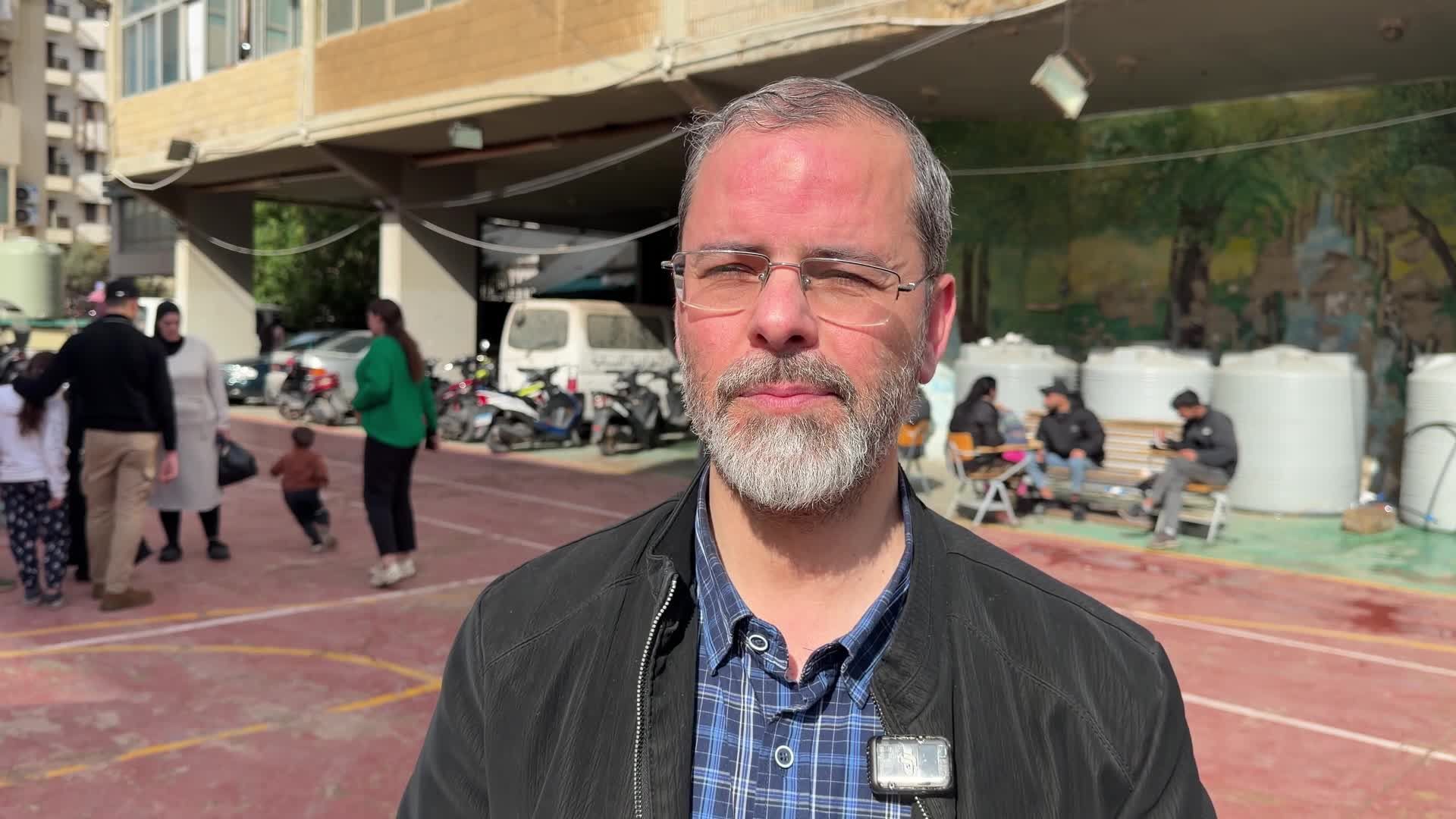
Abbas Kanaan, the media official for the national relief council "Samidoun," stated that civil initiatives have managed to contain the majority of the repercussions from Lebanon's displacement crisis. He attributed this to what he described as the state's absence in fulfilling its fundamental duties during the emergency.
In a statement to Unews Agency, Kanaan elaborated that the council, alongside volunteers and civil institutions, intervened to fill the gaps in relief and service provision. The operational response involved dividing Lebanese territory into 109 sectors to manage the displacement and establishing 644 shelter centers. This effort engaged over 10,000 volunteers and humanitarian workers.
He indicated that these efforts encompassed providing displaced persons with living, health, psychological, and guidance assistance. Support was also extended to families who sought refuge in safer areas. Kanaan affirmed that this initiative has helped mitigate the humanitarian impact of the crisis.
Regarding the council's relationship with state institutions, Kanaan pointed to "weak official cooperation." He noted that governmental presence was limited, with only a partial role played by the Ministry of Public Health, while effective coordination with other ministries—particularly Social Affairs, Education, and Interior—was lacking.
Kanaan called on official bodies to take urgent measures. Key recommendations include opening schools and educational institutions to accommodate the displaced and securing their protection in their current locations. This is especially critical given that some families remain on the streets or refuse to relocate to distant areas for various reasons.
He revealed that the number of displaced persons in Lebanon has reached approximately 1,049,000 individuals, equating to nearly 134,000 families, according to official estimates. Kanaan emphasized that this scale necessitates a comprehensive state response in cooperation with international organizations.
Kanaan warned that the crisis's prolongation risks turning the displacement into a protracted situation. He stressed the imperative for a comprehensive national plan to address its humanitarian and social consequences.
Concluding his remarks, he issued an appeal to international and human rights organizations, as well as civil societies worldwide. He urged them to support the displaced in Lebanon and to translate human rights principles into practical steps that alleviate their suffering.