
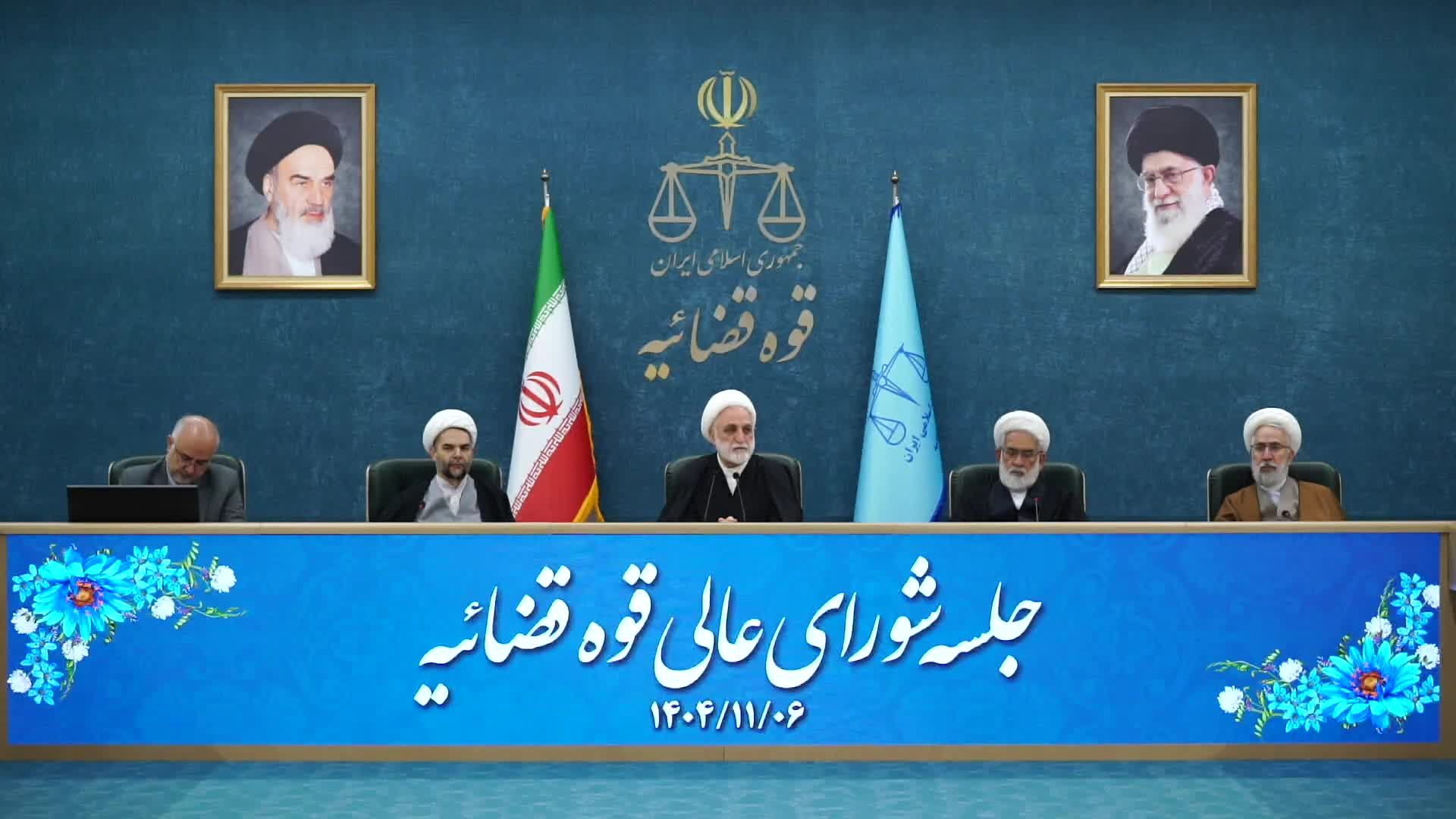
During a meeting of the Judicial Council in Tehran on Monday, the Head of Iran's Judiciary, Gholamhossein Mohseni Ejei, declared that recent military mobilizations and threats by "enemies" in the region would not achieve their objectives. He emphasized that any potential aggression against Iran would fail, as it has in the past.
Ejei stated that the adversary's strategy focuses on exerting pressure on the Iranian people and the economy, attempting to incite renewed public unrest and terrorist activities. He affirmed that Iranian authorities would confront and thwart these attempts.
Reflecting on past confrontations with the United States and other opponents, Ejei remarked that the enemy failed to recognize that divine support emerges from within the nation. He claimed that opponents of the Islamic Republic had mobilized all their capabilities to end the system, to the extent that even some allies believed it was over, before the enemy itself raised its hand and sought a ceasefire.
The judiciary head referenced past conflicts, including a "twelve-day war," noting that the enemy, with American support, believed it could overthrow the Islamic Republic, but that attempt ended in failure. He also cited the "January sedition," which he said was prepared with the intent to topple the system, asserting that some parties still cannot comprehend that the enemy seeks not to negotiate but to undermine the state.
On domestic matters, Ejei stressed the imperative of preventing additional economic pressure on citizens. He called for support of "honest" economic activists and production centers that supply the country's essential goods. Furthermore, he underscored the critical role of the Ministries of Oil, Agriculture, Economy, and Industry and Trade, alongside the Central Bank, in combating corruption. He demanded the eradication of corruption's root causes and confronting it at its source.