
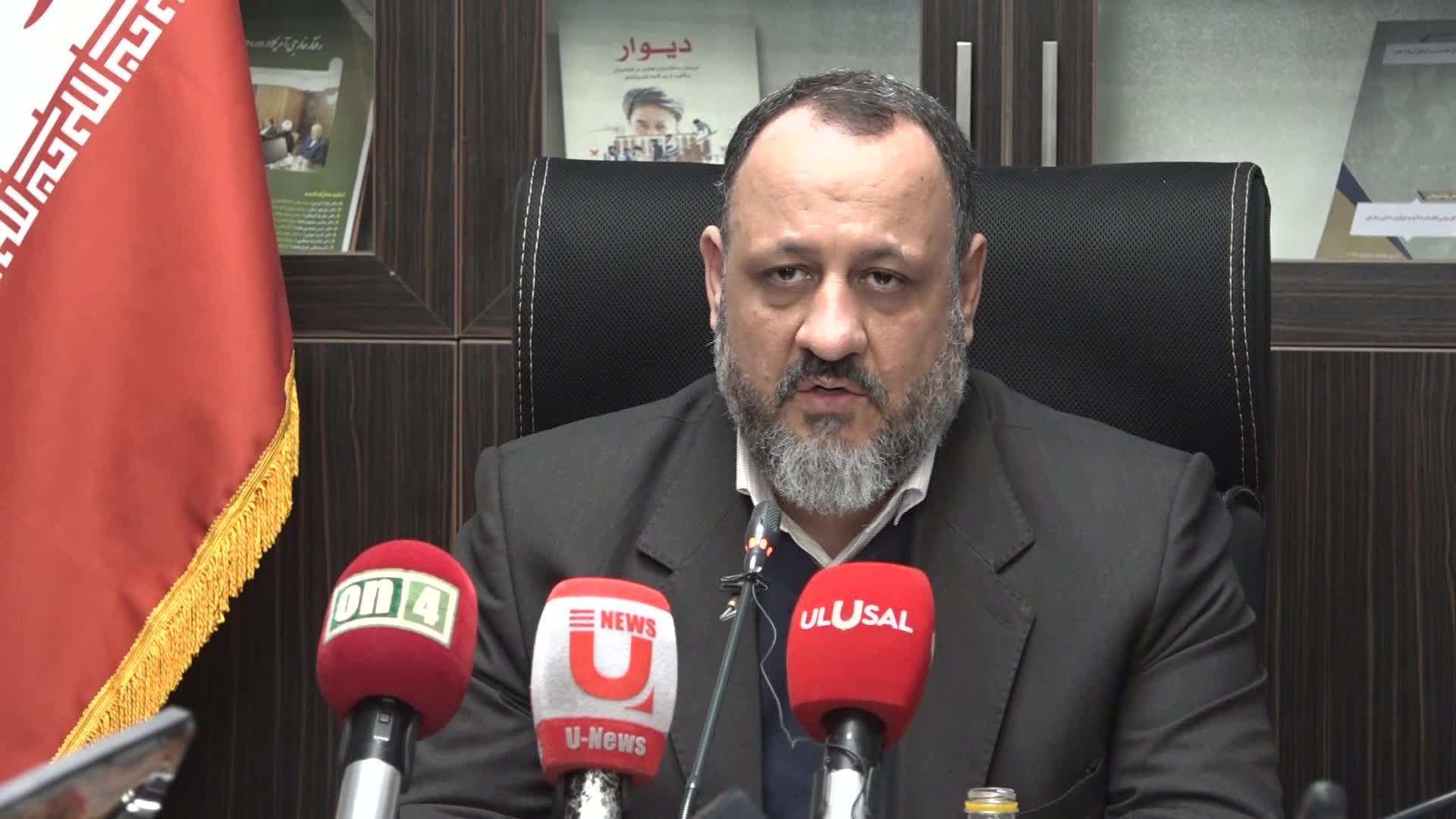
A seminar to discuss the U.S. National Security Strategy document was held at the Noandish-Sazan Institute. Dr. Ahmad Zarean, head of the institute's studies center, presented a comprehensive analytical reading of the document's key dimensions and discussed its implications for current U.S. foreign policy during a press conference.
Dr. Zarean began with an overview of the document, noting that while it may carry a symbolic character, it holds significant importance from multiple perspectives. He clarified that the document does not necessarily reflect the actual executive strategies of the United States but rather constitutes a framework for Washington's declared strategies.
He highlighted distinctions between the new document from the Donald Trump administration and the previous version from 2017. The 2017 document was largely authored by the traditional Republican establishment, whereas the new document was shaped by the "MAGA" movement, which criticizes post-Cold War American policies and mobilized a broad popular base under the slogan "Make America Great Again."
Dr. Zarean added that the new document reiterates Trump's electoral positions and translates his public diplomacy rhetoric, serving as an expression of American foreign policy over the past year. He explained that the document contains both official text and an implicit context, both of which require examination. It reflects, he argued, a deviation from U.S. policies followed since World War I, framing Washington's assumption of global burdens as a grave error committed by American politicians pursuing their own dreams.
The document's preface, he pointed out, includes anti-elite discourse and criticism of past strategies, globalization, free trade, and the cost of defending allies. It also criticizes linking U.S. foreign policy to a network of international institutions, portrayed either as adversarial to Washington or as tools to undermine state sovereignty.
A section titled "What Do We Want?" reflects the Trump team's awareness of upcoming challenges and references "survival," indicating that the United States perceives itself facing existential and security threats—a notable stance for a self-described superpower. The document focuses on immigration and border control, enhancing national disaster response capabilities, and maintaining the world's strongest military. It emphasizes principles of pragmatism and realism, alongside concepts of power and goal-oriented action. It also addresses nuclear deterrence, the necessity of an advanced missile defense shield, and seeking a global balance of power in economics, energy, technology, and soft power.
The document shifts the perspective on competitors like Russia and China, within a framework focusing on five key geopolitical regions: the Western Hemisphere, Europe, the Indo-Pacific, Asia, and Africa. For the Western Hemisphere, it calls for reviving the "Monroe Doctrine" to reassert exclusive U.S. influence in the Americas, focusing on combating drugs, rival external interventions, and the rise of governments not aligned with U.S. policy.
Regarding Europe, the document offers a pessimistic description of the continent as a declining civilization, criticizing European nations for not bearing their security burdens. It suggests Europe should in the future purchase security as a "strategic commodity" from the United States. For Africa, it indicates abandoning the approach of exporting liberal democracy, focusing instead on partnerships aimed at controlling the continent's natural resources.
Concerning the Middle East, the document adopts an approach based on the claim that most regional crises have been resolved. It notes the region was a perpetual priority for Washington due to energy, but circumstances have changed with the U.S. becoming the world's top energy exporter. It asserts that Trump's policies strengthened alliances in West Asia to serve American interests, focusing on Iran—portrayed as a destabilizing factor allegedly weakened following U.S. and Israeli actions, a characterization Dr. Zarean viewed as not reflecting the region's reality. The U.S. outlines four main objectives in the Middle East: managing energy flow, ensuring the security of Israel, maintaining open waterways, and combating terrorism, confirming the region's continued geopolitical importance despite public rhetoric.
Dr. Zarean described the document's implicit context as a tacit admission of receding U.S. power and an inability to manage global crises, acknowledging the failure of past strategies domestically and internationally. It signifies a transition from a unipolar to a multipolar international system recognizing Russia and China as global powers. The prominent inclusion of Trump's name, he noted, reflects a personal dimension, attempting to portray him as an achiever and a global peacemaker.
He also addressed contradictions within the document. While Washington tries to imply the Iranian dossier is resolved, the linkage of energy, waterways, and Israeli security to Iran and the Axis of Resistance indicates Tehran remains an unresolved challenge. The document reflects the dominance of far-right ideas rejecting the global liberal order, showcasing support for authoritarian regimes for economic motives, and criticizing international institutions in which U.S. trust has declined.
In response to a question about the document's reliability, Dr. Zarean stated that downplaying the Middle East and Iran is unrealistic. He affirmed that the opening of a U.S. consulate in the Kurdistan Region, attempts to disarm Hezbollah, and efforts to dissolve the Popular Mobilization Forces in Iraq confirm that the United States does not intend to leave the region and will continue its interventionist approach.
He further indicated that in Latin America, Washington seeks to manage tensions with Russia and China using economic and psychological pressure rather than direct military confrontation, whether in Venezuela or elsewhere. Regarding North Korea and Afghanistan, Dr. Zarean confirmed the U.S. avoids high-cost, low-return dossiers, dealing with them according to a profit-and-loss calculus.