
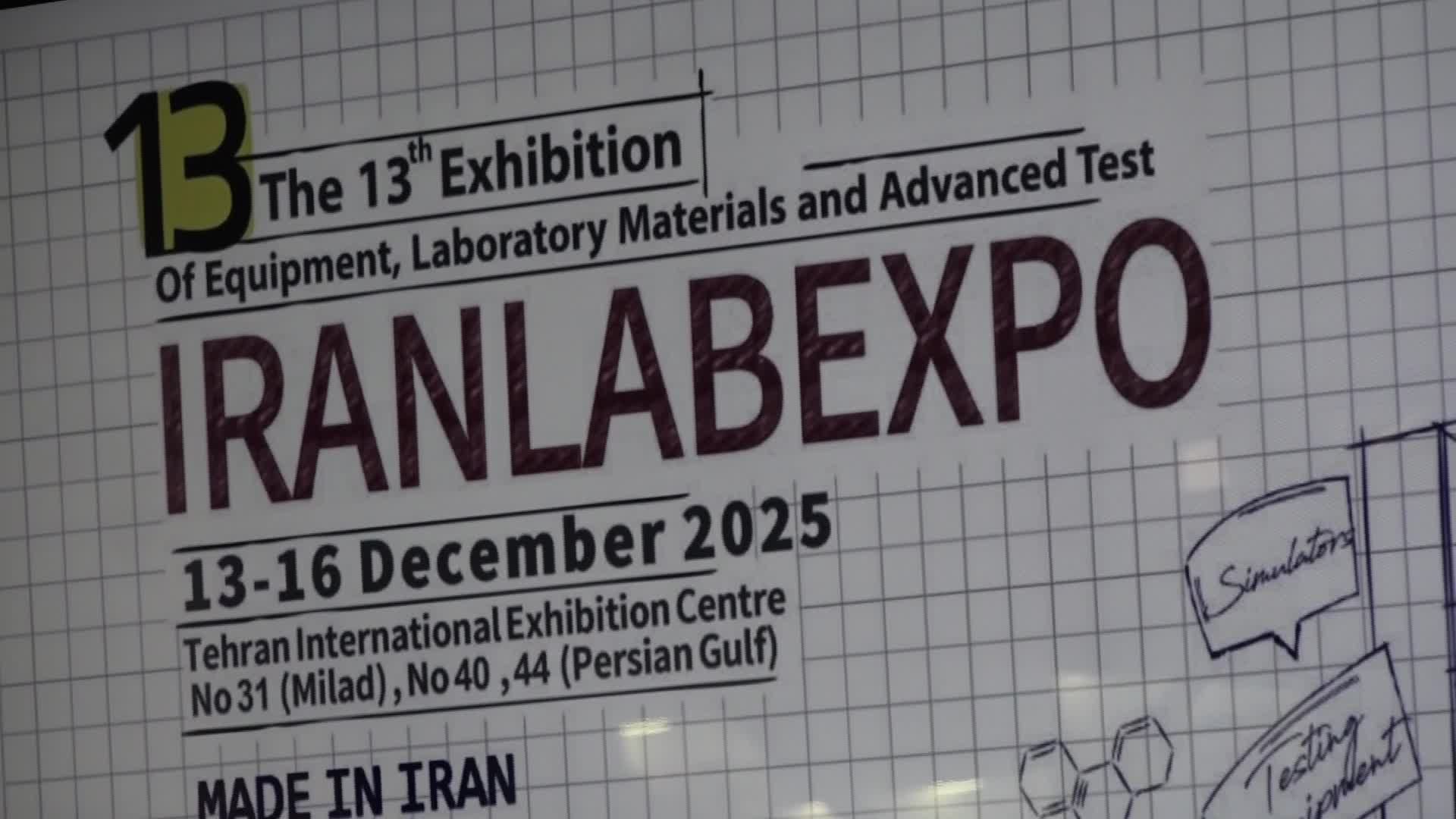
At a press conference today, Abdolhasan Bahrami, Acting Head of the Command Center for Specialized Committees for Developing the Knowledge Economy, announced the details of the upcoming thirteenth "Made in Iran" exhibition. The event, dedicated to laboratory equipment, materials, and advanced testing and inspection devices, will be held from December 13 to 16, 2025, at the Tehran International Exhibition City.
Launched in 2013 as a national initiative, the exhibition was established to support domestic manufacturers, reduce import dependency, and meet the needs of national universities and research centers. Its foundational vision was to build an integrated production chain from engineering design to after-sales service. The inaugural event featured approximately one hundred companies showcasing a thousand specialized devices.
Bahrami highlighted the sustained support from the Scientific Deputy, particularly through procurement programs that have fostered trust between research institutions and local producers. This has created an institutional environment conducive to knowledge transfer and innovation. The affiliated specialized committees are instrumental in identifying industrial sector needs and connecting them with domestic knowledge-based companies, streamlining bureaucracy, and facilitating government-university-industry collaboration to align production with strategic priorities.
Over twelve consecutive editions, the exhibition's scope has evolved from startup support to a broader strategic vision. This includes implementing a "smart classification" support system based on technology level and local component percentage, improving product quality and design, and incorporating advanced technologies. A dedicated focus on 'Advanced Industrial Testing and Inspection' has been added to serve major industries. Support mechanisms have also progressed from direct purchasing to policies based on quality and technical standards, enhancing the competitiveness of Iranian products.
To date, the exhibition has hosted over a thousand participating companies and displayed more than twenty thousand advanced products. Its outcomes include equipping over seven hundred laboratories and research centers nationwide, a step Bahrami described as foundational for building sustainable local capacity in advanced technologies.
For the 2025 edition, about 250 companies are confirmed to participate, with an estimated nine thousand products on display. The cumulative sales from past exhibitions exceed 2,500 billion tomans (approximately $200 million USD). Information for researchers and buyers is available via the official portal: iranlabexpo.ir.
This year's edition will place special emphasis on advanced industrial testing and inspection equipment, aiming to further integrate knowledge-based companies from academic settings into the industrial sector and enhance their capabilities for regional and international market entry.
The exhibition is structured around 14 main product groups:
1. Oil, Gas, and Petrochemical Industries
2. Electricity, Electronics, Software, and Simulation Systems
3. Construction and Civil Engineering
4. Mechanics, Chemistry, and Metallurgy
5. Agriculture and Environmental Protection
6. Basic Physics and Applications
7. General Laboratory Equipment
8. Strategic Technology Equipment and Machinery
9. Medical Engineering and Biomaterials
10. Laboratory Materials
11. High-Tech Educational Equipment
12. Industrial Testing and Inspection Devices
13. Technical Calibration Services
14. Specialized Technical Support Services
This comprehensive offering is supported by integrated after-sales and technical service packages.
Bahrami outlined the exhibition's key achievements, including:
- Creating a national platform for marketing knowledge-based products and technologies.
- Fostering the growth of over a hundred high-capability companies in various tech fields.
- Reducing foreign currency outflow by providing quality local alternatives to imports.
- Establishing a comprehensive national database for laboratory and testing equipment.
- Enhancing direct producer-end-user communication to drive product improvement.
- Supporting industrial design and incentivizing the local production of new products.
The exhibition's updated vision now extends beyond the domestic market to systematically develop export platforms. Strategic steps include inviting foreign research institutions, planning specialized exhibitions abroad, developing technology transfer pathways, and equipping partner countries' labs with Iranian-made equipment. Bahrami underscored the vital role of media in accurately conveying the competitiveness of Iranian products globally.
In response to questions, Bahrami addressed Iran's international standing in laboratory equipment, noting that sanctions have acted as a catalyst for local innovation. He stated that Iranian companies now produce advanced technologies such as 3D printing systems, plasma processing equipment, complex medical simulation systems, and spectroscopic systems for nuclear industries. These products have been exported to technologically advanced nations including Russia, China, and Canada, positioning Iran as a leading competitor in West Asia.
On self-sufficiency and quality, Bahrami emphasized that recent exhibition policy has focused on elevating quality, design, and user experience, citing an associated Industrial Design Festival. He noted that Iran is approaching relative self-sufficiency in many equipment categories and that companies integrating AI, laser, and nanotechnology receive enhanced support to prepare for international markets.
Looking ahead, Bahrami extended an invitation to international media to cover the exhibition, describing them as essential partners in conveying Iran's technological capabilities. Post-exhibition plans may include international events, partnership programs, and joint manufacturing initiatives tailored to European, Asian, and Middle Eastern markets.
The "Made in Iran" exhibition represents a significant event for the international community as it:
- Exemplifies a national knowledge- and innovation-based industry supported by proactive government policy.
- Demonstrates Iran's capacity to overcome import restrictions by developing a sophisticated local manufacturing ecosystem.
- Showcases equipment with applications across vital economic sectors, from heavy industry to healthcare.
- Opens avenues for expanding Iranian technical exports through international partnerships.
- Presents a model of turning technological challenges into opportunities for scientific independence.
- Relies on foreign media coverage to build bridges of trust with global markets.
The thirteenth edition marks a strategic pivot for Iran's knowledge-based sector, charting a course from advanced self-sufficiency towards international competition and export, underpinned by local innovation and a commitment to forging global partnerships.